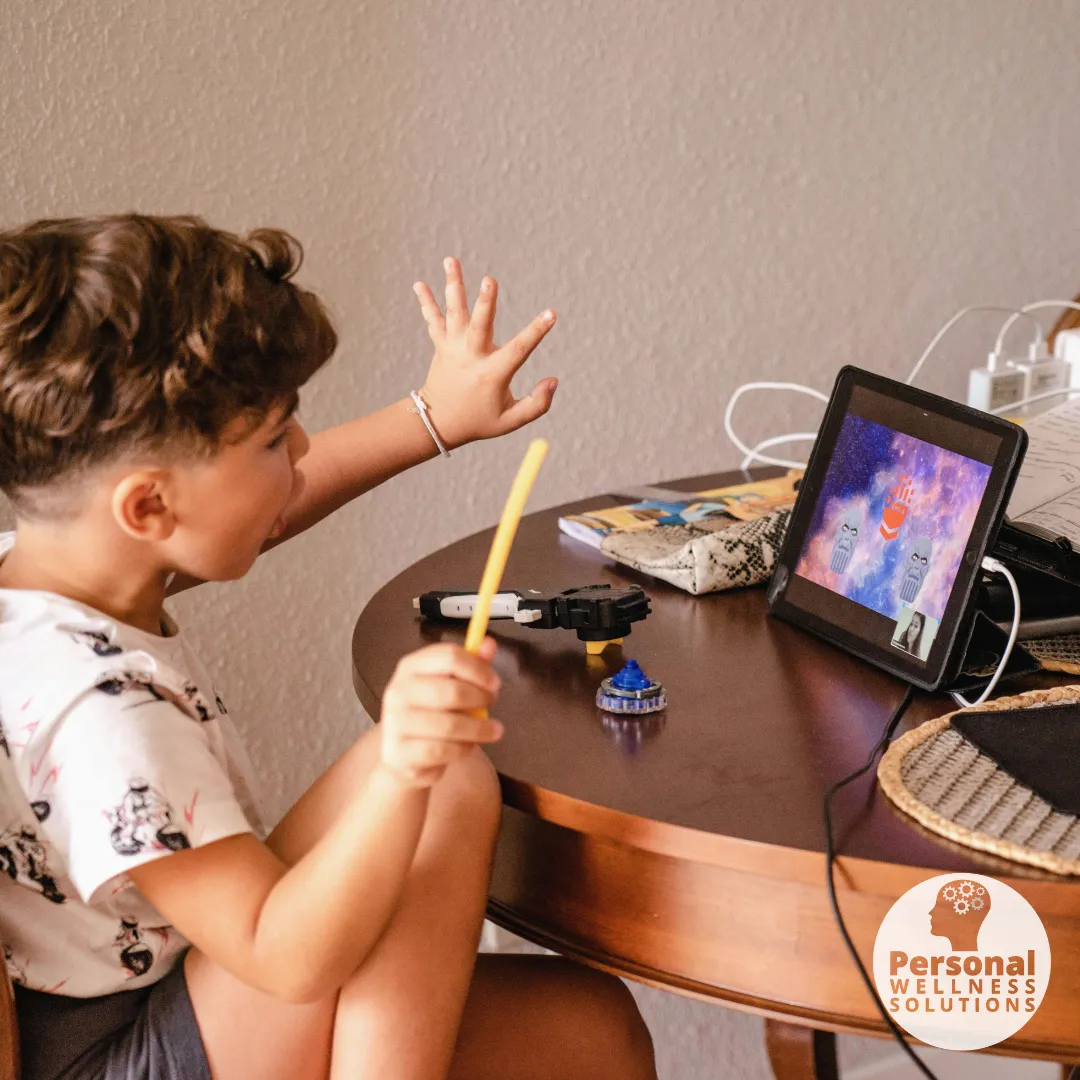
Why Kids Meltdown After Screens
Why Your Kid Melts Down After Screen Time
It is not defiance. It is a nervous system that hasn’t landed yet — and 6 ways to help.
Personal Wellness Solutions•Alicia DiVico, LMHC, CAP
I came across a thread from @anwenfarsley about calming ADHD kids after screen time, and it is worth talking about — because the moment she describes is one almost every parent knows. The tablet goes off, and within minutes you have a kid who is wired, weepy, argumentative, or bouncing off the walls. It feels like defiance. It usually is not.
Here is the reframe that changes everything: the meltdown is not happening because your child is being difficult. It is happening because their nervous system is still revved up from the screen and has not been given a way to come back down. ADHD brains, in particular, have a harder time shifting gears — moving from a fast, high-stimulation activity into a slower, regulated one. The screen ends, but the internal engine keeps running.
Once you see it that way, the goal stops being “get them to behave” and becomes “help their system land.” Here is how to do that.
1. Expect a lag. The brain stays switched on after the screen switches off.
Kids rarely calm down the instant a device goes dark. For a while afterward they can stay emotionally keyed up, mentally restless, and physically buzzy — often for longer than we assume. If you expect an immediate reset, you will read normal post-screen dysregulation as misbehavior. Build in a buffer instead.
2. Don’t stack a demand right on top of a screen.
The fastest way to tip a revved-up kid into a meltdown is to go straight from a screen into something hard. Right after screen time, try to avoid jumping into:
•homework
•chores
•corrections or lectures
•rushed transitions out the door
The nervous system needs a reset phase before it can meet a demand. Give it that phase first, and the demand goes far more smoothly.
3. Turn the sensory volume down.
You are not trying to do anything fancy here — you are lowering the overall input so the body can settle. Where you can, reduce:
•loud noise
•bright lights
•fast, overlapping conversation
•constant background stimulation
This is the kernel of truth inside the trendy “dopamine detox” idea. It is less about dopamine and more about sensory load: a calmer environment simply asks less of an overstimulated nervous system, so it can downshift.
4. Let the body discharge the energy.
Movement is one of the most reliable ways to help a revved brain rebalance. After heavy screen stimulation, a lot of kids regulate better through:
•walking
•stretching
•jumping
•carrying something heavy (occupational therapists call this “heavy work” — pushing, pulling, and lifting are genuinely organizing for the nervous system)
•any quiet, physical movement
The body helps burn off the excess charge so the brain does not have to hold all of it.
5. Bridge into something that feels safe, not something that demands performance.
After movement, transition into a low-pressure activity rather than straight into a task they can fail at. Good landing pads include:
•drawing
•puzzles
•building
•quiet sensory play
These let the brain “come down” gradually instead of being yanked from high stimulation into high expectation.
6. Calm transitions now prevent the explosion later.
Here is the part that pays off: a lot of post-screen meltdowns happen not in the moment the screen ends, but twenty minutes later — because the system never fully reset and finally tips over. When you slow the pace, lower the stimulation, and ease the emotional pressure, you are heading off that delayed blow-up before it builds.
There is also something powerful happening underneath this, and it has a name: co-regulation. A child’s nervous system borrows calm from a regulated adult. When you stay slow and steady through the transition, you are literally lending them the regulation they cannot yet generate on their own. Your calm is the intervention.
Why this actually works
ADHD brains struggle to shift quickly from high stimulation into calm focus — that gear change is exactly where they get stuck. So the whole approach is one simple chain: lower the sensory load, give the nervous system room to recover, let the body move the excess energy out, and the emotional regulation follows. You are not forcing calm. You are removing the obstacles to it.
One last thing
None of this requires perfect parenting, and it is not about earning a quiet kid through better technique. It is about working with your child’s brain instead of against it. And while this is framed around ADHD, the same approach helps a lot of kids — sensory-sensitive, anxious, or just plain tired — because every nervous system needs a way to come down from being revved up.
If screen time at your house regularly ends in meltdowns, chaos, or battles that leave everyone frayed, you are not failing — and you do not have to white-knuckle it alone. This is exactly the kind of thing we help families work through at Personal Wellness Solutions, without the yelling or the shame.


