Whole Leaf vs. 7-OH: The Kratom Reality
Kratom, Honestly
What Dr. Christopher McCurdy’s research and fifteen years in the counseling room say about the pros, the cons, and the part nobody wants to hear
I’ll be honest with you up front, because pretending to be neutral about kratom would be its own kind of dishonesty: I’m torn and in my “it depends” mode. I’ve watched kratom help people step down off far more dangerous opioids. I’ve also sat across from people who are genuinely, physically stuck on it reorganizing their days around the next dose, spending money they don’t have, and quietly ashamed because everyone told them it was “just a plant.” Both of those things are true at once. That’s the whole problem with kratom, and it’s why a real pros-and-cons conversation matters more here than with almost any other substance.
What kratom actually is
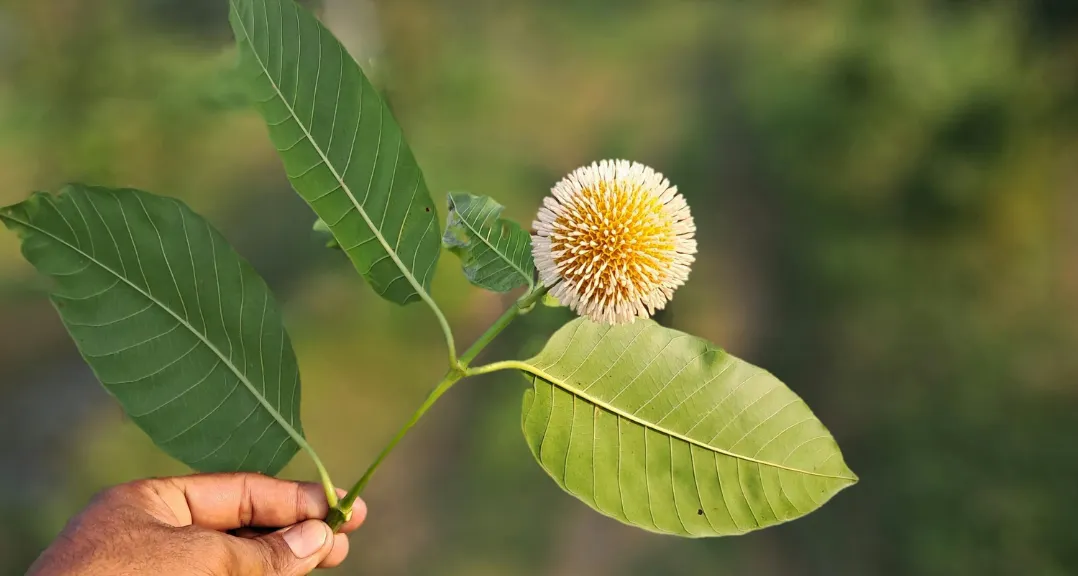
Kratom (Mitragyna speciosa) is a tree in the coffee family, native to Southeast Asia, where its leaves have been chewed and brewed for generations to fight fatigue, ease pain, and take the edge off opioid withdrawal. Its two headline compounds, mitragynine and 7-hydroxymitragynine, act as partial agonists at the mu-opioid receptor the same receptor targeted by morphine and heroin, though kratom engages it differently. At low doses it tends to act as a stimulant; at higher doses, more like a sedating opioid. That dual personality is exactly what makes it appealing and exactly what makes it tricky.
Why McCurdy’s lab is the credible center and one caveat
If you read anything serious about kratom, you’ll run into Dr. Christopher McCurdy at the University of Florida. He’s a distinguished professor of medicinal chemistry, a behavioral pharmacologist and pharmacist who began studying kratom in 2005, has secured more than $40 million in federal research funding, and has moved both whole kratom leaf and its main alkaloid, mitragynine, into FDA-sanctioned human clinical trials. He has briefed the WHO, the UN, and the FDA. More than any other single lab, his is why we can talk about kratom with data instead of vibes. His central, oft-repeated finding: whole-leaf kratom and the concentrated compounds increasingly sold as “kratom” are not the same substance, and treating them as one muddies everything.
One caveat, in the spirit of following the evidence wherever it leads, is a 2026 ProPublica investigation reported that McCurdy had longstanding, undisclosed financial ties to the American Kratom Association — the industry’s main lobbying group, funded largely by leaf vendors — including travel reimbursements, foundation donations, and funding for an annual research symposium, none of it disclosed on his papers or conflict-of-interest statements. That doesn’t erase his science, which is genuinely foundational and even led the FDA to recommend scheduling one kratom-derived compound. But it does mean the loudest scientific voice arguing to keep leaf legal has a stake in that outcome, and you’re allowed to hold both facts at once.
The distinction that changes everything: whole leaf vs. concentrated 7-OH
Here is what I consider to be one of the most important thing to understand in 2026. The bottled shots, gummies, tablets, and “extracts” showing up at gas stations and smoke shops are often not kratom leaf in any traditional sense. Many are concentrated or semi-synthetic 7-hydroxymitragynine “7-OH” at levels a leaf never produces on its own. Poison-center physicians have described these concentrates as roughly five to fifteen times more potent than morphine. In July 2026, the DEA filed notice of its intent to temporarily place concentrated 7-OH (above a 0.05% threshold) and three synthetic derivatives into Schedule I the same category as heroin with the order expected to take effect no earlier than August 5, 2026. Crucially, that action targets the concentrates, not natural leaf; the FDA had recommended the step back in July 2025. Nine states have gone further and banned kratom outright. So when someone says “kratom is fine” or “kratom is deadly,” the honest first question is always: which kratom are we talking about?
The case for kratom
Let me give the plant its due, because the pros are real for a lot of people. Used as whole leaf, kratom relieves pain, lifts mood, and boosts energy and focus its traditional use was literally to power through hard physical labor in the heat. A meaningful number of people use it instrumentally rather than recreationally: to work, to parent, to function, to stay off heroin or fentanyl. Research on regular users consistently finds that many report improved daily functioning and productivity without the social and occupational wreckage we associate with harder opioids. McCurdy’s animal work suggests kratom alkaloids can ease opioid withdrawal while producing less physical dependence than morphine which is precisely why so many people reach for it as an exit ramp. And compared with a fentanyl-poisoned street supply, a consistent, low-dose whole-leaf habit is, for some people, a genuine harm-reduction step. I won’t pretend otherwise.
The case against
And now the part nobody selling it wants to talk about.
Physical dependence. Because kratom’s active compounds hit the mu-opioid receptor, regular use produces real physical dependence — and stopping produces real physical withdrawal. It tends to be milder than full-agonist opioid withdrawal, but “milder” is not “mild.” People describe muscle and joint aches, runny nose, sweating, insomnia, diarrhea, restlessness, irritability, anxiety, and a flattened, depressed mood that can linger. The best current data, including large surveys out of Johns Hopkins, find that how often you dose matters more than how much frequency, not quantity, is the strongest predictor of dependence and of meeting criteria for kratom use disorder. Men tend to report more withdrawal and more problems than women. Reassuringly, dependence often exists without major life impairment; distressingly, “often” is not “always,” and the people who tip into full use disorder are the ones who end up in my office.
Tolerance. Tolerance builds the ordinary opioid way: repeated activation of mu-opioid receptors, the brain downregulating and desensitizing them, and the dose that worked in week one doing less by week six. Escalation within the first few months of daily use is common. This is the quiet engine behind most kratom problems — you’re not chasing a high, you’re chasing normal, taking more just to feel like yourself, and the dose keeps creeping upward.
Cost. Whole-leaf powder is cheap per gram, which is part of the trap. A casual habit might run $30 to $80 a month; heavier daily use, capsules, or extracts push that to $150 and well beyond. But those numbers assume a stable dose — and tolerance guarantees the dose won’t stay stable. What starts as a $40 month has a way of becoming a $500 month, and concentrated 7-OH products carry a premium on top. It rarely bankrupts anyone the way a fentanyl habit does, which is exactly why it flies under the radar for so long.
The other risks. Whole-leaf kratom is essentially unregulated, so potency and purity vary wildly batch to batch, and products have been found adulterated or contaminated salmonella and heavy metals have both turned up over the years. Kratom is processed by the same liver enzymes many prescription drugs use, so interactions are a real and under-appreciated danger; mixing kratom with benzodiazepines, other opioids, or alcohol is where much of the serious harm happens. There are documented case reports of liver injury and seizures, and newborns of mothers who used kratom in pregnancy can experience neonatal withdrawal. And the headline number people cite the CDC’s roughly 5,200 U.S. overdose deaths involving kratom between 2020 and 2024 deserves an honest footnote: most involved other drugs too. But “rarely the only cause” is not the same as “safe.”
What actually helps people get off — and stay off
Here’s where my clinical experience and the research finally shake hands. When someone is truly stuck on kratom, willpower and a taper plan written on a napkin usually aren’t enough and I’ve watched medication make the difference between another failed attempt and an actual exit. There are two distinct jobs medication does here, and it’s worth separating them.
The first is treating the opioid-type physical dependence directly. Buprenorphine (often as Suboxone), a partial opioid agonist that’s FDA-approved for opioid use disorder, is the most-studied and most effective tool for kratom and 7-OH dependence, and it’s now widely available by telehealth. For someone dosing multiple times a day just to stave off withdrawal, this is frequently the piece that finally works.
The second job and this is the one I suspect I see most, given who ends up in a counselor’s office is treating what’s underneath and what withdrawal drags to the surface: depression, anxiety, ADHD, chronic pain, and/or insomnia. Low mood, restlessness, and anxiety aren’t only withdrawal symptoms; for many people they’re the reason kratom got a foothold in the first place. Appropriately prescribed antidepressant. Other psychotropic medication, or supplements, paired with real therapy, may make the coming-off easier, and more importantly, it removes the thing the kratom was quietly medicating, which is a large part of why people stay off. My lived observation that people do dramatically better with psychotropic support isn’t a hunch; it lines up with how the pharmacology and the co-occurring conditions actually work.
The honest bottom line
So is kratom bad? The intellectually honest answer is: it depends on which kratom, at what dose, how often, and instead of what. Whole-leaf kratom used sparingly by an adult who’d otherwise be buying fentanyl is a different story than concentrated 7-OH taken several times a day by someone who no longer remembers what their baseline feels like. It is not as severe as the substances it’s often used to escape. It is also not the harmless herbal supplement its marketing promises, and the people who get stuck get genuinely, physically, expensively stuck. Holding both of those truths at the same time isn’t fence-sitting. It’s just accuracy and accuracy, more than alarm or endorsement, is what actually helps people make a good decision about their own bodies.
This piece is for education, not medical advice, and kratom withdrawal is genuinely uncomfortable — if you’re thinking about stopping, do it with clinical support rather than white-knuckling it alone. If you want to keep pulling on these threads, we get into the messy middle of substances, dependence, and mental health on our podcast, Therapy is Dope with Alicia and Laura.


