Tending Love: Science-Backed Relationship Skills
What Actually Keeps a Relationship Together
And why “relationships are work” is only half the truth
You’ve heard it a hundred times: relationships are work. It gets repeated like a law of nature, usually right before someone tells you that if it feels hard, that’s just the price of love. I want to gently push on that, because after years in the chair with individuals and couples—and honestly, just from watching people live their lives—I don’t think it’s quite right. The effort is real. But the story we tell about that effort matters enormously, and “work” might be the wrong word for the healthiest version of it.
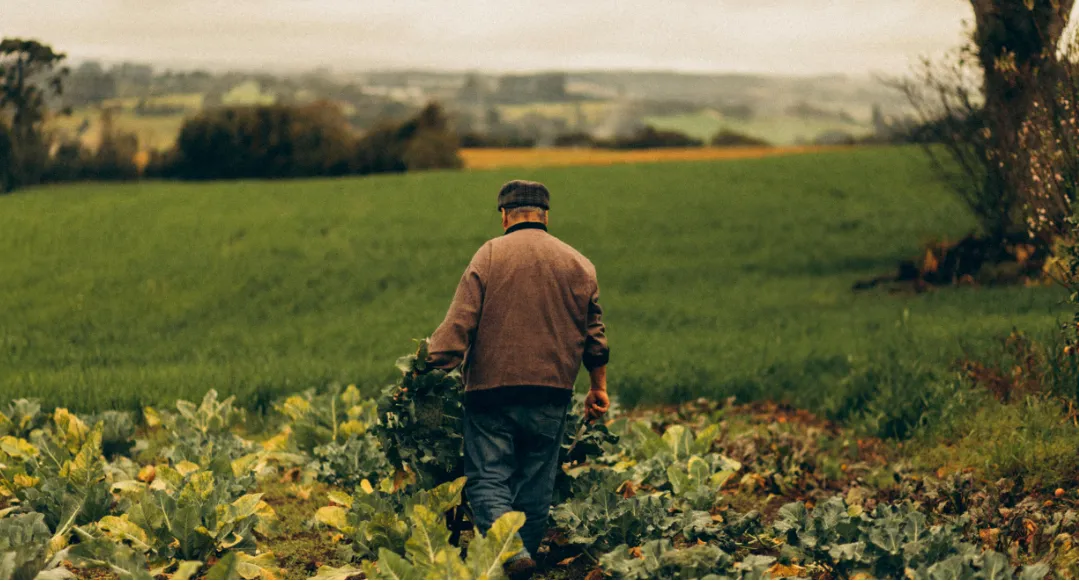
There’s research that backs this up. When people frame their relationship as a “unity”—one seamless thing that shouldn’t have friction—they feel more threatened by ordinary conflict than people who frame it as a journey, something that naturally has high points and low ones (Lee & Schwarz, 2014). The metaphor you carry quietly shapes how much a normal disagreement scares you. So before we talk about effort, it helps to notice that not all effort feels the same. Tending a garden takes effort. Grinding a stone takes effort. One of those is satisfying and one is soul-deadening—and a lot of what determines which one your relationship feels like isn’t how hard you’re trying. It’s fit.
The part that really is a skill
Let me be fair to the “work” camp first, because the science genuinely does point to learnable behaviors. I’m Gottman-trained, and the Gottmans’ decades of research on thousands of couples surfaced a handful of patterns that predict who stays together with startling accuracy.
Stable couples aren’t the ones who never fight—they’re the ones who keep roughly five positive interactions for every negative one, even during conflict. They avoid contempt, the eye-rolling, sarcasm, and mockery that Gottman found to be the single strongest predictor of divorce. They turn toward each other’s small bids for attention rather than brushing them off; couples who stayed together did this about 86% of the time, while those who split did it about a third of the time. And they repair—a joke, a hand on the shoulder, “let me try that again”—before a rupture hardens. The success of those repair attempts predicts survival better than how ugly the fight got. Layer in genuine friendship, admiration, and expressed gratitude, and you have the reservoir couples draw from when life gets heavy.
Every one of those is a practice. So yes, there’s effort involved. But notice what kind: it’s the effort of paying attention to someone you like. That’s gardening, not stone-grinding—and the difference brings me to the part people underrate.
The part that’s really about fit
Here’s what I see from the chair that doesn’t always make the list. Two things quietly determine whether the “work” feels like tending or grinding: a shared world, and the ability to tolerate each other’s flaws.
A shared world. Common interests get dismissed as superficial, but they’re the connective tissue of daily life—the reason you have something to turn toward each other about. Arthur Aron’s research on “self-expansion” found that couples who regularly do novel, engaging things together stay more passionate and satisfied over time, and Gottman’s highest tier of relationship health is “shared meaning.” One honest caveat I’d offer: it’s less about identical taste in movies and more about a shared world—overlapping values and a habit of doing life together. You don’t need the same hobbies. You need enough common ground that connection has somewhere to land.
Tolerating each other’s flaws. This is the one I’d underline twice. About 69% of a couple’s conflicts are what Gottman calls perpetual—rooted in personality and lifestyle differences that never get solved, only managed. The couples who last aren’t the ones who resolved everything. They’re the ones who made peace with the unsolvable. There’s a whole evidence-based approach, Integrative Behavioral Couple Therapy, built around exactly this: acceptance, not endless fixing, is often the mechanism of change.
And a lot of what we label a partner’s “flaw” is really just a difference that lands hard because of our wiring. Take volume. One person hears a raised voice and their whole nervous system braces—this feels like aggression, like danger. Another grew up in a big, loud, expressive family where talking over each other was affection, and a raised voice doesn’t register as a threat at all. Neither is wrong. They’re operating from different windows of tolerance, shaped by different families of origin. When you can see your partner’s “too much” or “too cold” as a difference in conditioning rather than a character defect, the friction drops—and the relationship stops feeling like something you have to grind against.
So, is it work?
Here’s where I land. The effort is real—the skills are real, and they’re worth learning. But with the right fit, a shared world and mutual tolerance, that effort stops registering as labor. It becomes the ordinary, satisfying attention you give to something alive and growing. The couples who describe their relationship as constant work are often the ones grinding against a poor fit or a metaphor that makes every bump feel like a verdict. The ones who last tend to describe something else: a person they genuinely like, a life they’re building together, and a willingness to let each other be imperfect.
That’s not the absence of effort. It’s effort that finally feels like it’s going somewhere.
Alicia Divico, LMHC, CAP, ICADC, is a Gottman-trained therapist who works with both individuals and couples at Personal Wellness Solutions in Tampa, Florida. If your relationship is starting to feel more like grinding than gardening—or you want to build these skills before it gets there—reach out at mypersonalwellnesssolutions.com.


